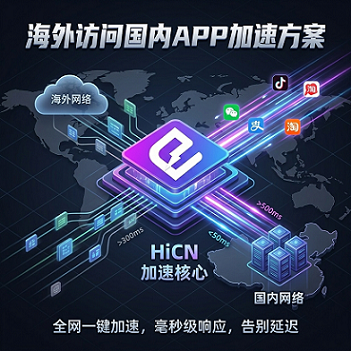
I. Why You Need This Use-Case Scenario Guide
Overseas branch offices (North America, Europe, Southeast Asia) need continuous access to domestic office systems, financial applications, and team collaboration tools during daily operations. However, cross-border connections naturally suffer from excessive routing, high jitter, and a high probability of single-point failures, while internally enterprises face rigid requirements: "business continuity cannot be interrupted, data compliance must be met, and devices require unified management."
A single tool, a single line, or a single point of decision-making is often insufficient. Starting from the actual pain points of branch managers, this article analyzes why traditional VPNs and standard accelerators are inadequate for business continuity, explains how HiCN's intelligent routing, dual-backup network, multi-device coverage, and compliance capabilities map to specific scenarios, and concludes with a clear statement on its scope of applicability.
After reading, you should be able to answer the following three questions:
● Which root cause your branch office's current pain points stem from;
● Which enterprise applications are currently covered by HiCN and suitable for testing;
● Which scenarios require higher-level dedicated line solutions that HiCN cannot replace.
II. Three Core Pain Points of Overseas Branch Managers
The following three categories of pain points repeatedly surfaced during anonymous HiCN enterprise consultations, serving as the starting point for determining "whether an acceleration tool is needed" in this article. The specific numbers appearing in this text are purely illustrative and do not constitute statistical conclusions based on public customer samples; actual performance depends on team size, local network conditions, and target applications.
Pain Point 1: Cross-timezone video conference interruptions disrupt decision-making momentum
Monday morning meetings, client demos, and cross-timezone board calls are the most sensitive scenarios for branch offices. Over cross-border public networks, Feishu, DingTalk, Tencent Meeting, and WeChat Work Meetings frequently experience:
● Video or audio latency exceeding 300 ms;
● 1–3 interruptions during a 30-minute meeting, each taking 5–15 seconds to recover;
● "Silent freezing" during critical speaking moments, leading to missed decision opportunities.
The root cause is not merely insufficient bandwidth, but that a single line returning to China is prone to route congestion and node overload during evening peak hours (20:00–23:00 Beijing Time, overlapping with European and American office peak hours), compounded by overseas IP risk control from domestic office systems.
Pain Point 2: Financial system submission failures force monthly closing delays
When financial staff use domestic applications such as Kingdee Cloud and Yonyou U8, common problems include:
● Timeouts during batch submission of vouchers at month-end, requiring split submissions and resumable transfers;
● Receipts for large approval workflows delayed by several hours;
● Local components like USB Keys and certificates becoming invalid after abnormal network switches.
Financial systems are characterized by strict authentication chains, concentrated long-connection real-time pushes, and highly concentrated traffic peaks (month-end, quarter-end closing, tax filing). A single submission failure is often not due to "no network connection", but rather link jitter combined with risk control rejection, causing invisible packet loss where "the connection appears successful, but data never arrives".
Pain Point 3: Complex multi-device management leads to fragmented employee habits
The device mix of overseas branch staff usually consists of Windows office PCs + personal mobile phones + occasional home office devices. Many managers report that:
● Employees install network tools from unknown sources on their own, making security and compliance risks difficult to control;
● Sessions frequently drop when mobile phones switch between Wi-Fi and 4G/5G;
● IT departments cannot uniformly monitor line status, leaving troubleshooting reliant on individual descriptions.
Business continuity is not only a connectivity issue, but also an IT management challenge. If a tool can only cover a single platform or device, it can hardly serve as an enterprise-grade solution.
III. Limitations of Traditional Solutions: Why VPNs and Standard Accelerators Fall Short
3.1 Traditional Enterprise VPNs: Compliant but High Bandwidth Costs
Traditional enterprise VPNs (such as IPSec/SSL VPN) are typically used for intranet access and offer limited optimization for traffic bound for Mainland China. When overseas branch employees access domestic office systems via VPN, they often face:
● International egress bandwidth billed on a usage basis, driving costs up linearly with team size;
● High-bandwidth activities like video conferencing and file sync crowding out core office traffic;
● Cross-border, cross-carrier congestion, making latency and jitter difficult to control;
● Deployment cycles typically measured in quarters, falling behind rapid branch expansion.
While VPN remains the top choice for "accessing corporate intranets", it is not the optimal solution for "stably accessing domestic office and financial systems".
3.2 Standard Return-to-China Accelerators: Good User Experience but Weak Enterprise Adaptability
Return-to-China accelerators designed for individual consumer use perform adequately in audio/video and gaming scenarios, but commonly suffer from the following issues in enterprise environments:
● Client software covering only single platforms or lacking centralized management capabilities;
● Node ownership and cross-border routing lacking transparency, making audits difficult for finance and compliance teams;
● Lack of targeted optimization for enterprise office protocols (HTTP/S, WebSocket, TCP long connections);
● Incomplete datacenter location and compliance certification information, making adoption difficult for financial, government, and enterprise clients.
3.3 Dedicated Lines: Stable but High Barrier to Entry
MPLS dedicated lines and SD-WAN international dedicated lines are indeed enterprise-grade stable solutions, but their deployment period typically ranges from 1–3 months, with annual costs ranging from hundreds of thousands to millions of RMB, and they cannot cover employees' personal devices or overseas business travel scenarios.
A pragmatic choice for many branch managers is: while dedicated lines cover core roles and critical links, introduce a second-layer "acceleration tool" as a supplement to cover business travel, mobile office work, and personal employee devices.
IV. HiCN Enterprise-Grade Acceleration Path
4.1 Architectural Capabilities: Intelligent Routing + Dual-Backup Network (Based on Public Data)
The following capability descriptions are compiled from HiCN's official website, product introduction pages, and public support documentation for horizontal comparison with similar solutions. Whether specific mechanisms are always active and switches occur promptly should be benchmarked during actual working hours and should not be taken as a performance commitment.
● Intelligent Node Switching: The client automatically selects a superior return node based on real-time network conditions, target application data centers, and local ISP, avoiding long-term reliance on a single congested node;
● Dual-Backup Network: Features dual independent primary and backup lines in the return-to-China direction (with distinct physical paths and ISP egresses), allowing the backup line to take over if the primary line fails;
● Multi-Platform Clients: Windows, iOS, Android (including Google Play version), with support for router-level acceleration.
To be clear: "Dual backup" refers to possessing two independent primary and standby links in the return direction with differentiated physical paths and ISP exits to effectively take over traffic during single-point failures; it is not a guarantee of "zero disconnection", but rather a rapid recovery capability for single-point failure scenarios. Specific failover times in seconds depend on the failure type, the user's local network, and target system-side policies, and should be evaluated through comparative testing during actual business hours.
4.2 Covered Applications List (Suitable for Testing Inclusion)
The following list illustrates whether common office and financial applications can be included in compatibility testing. It is not a performance commitment or a guarantee for all applications and network environments. Please conduct actual testing during your working hours and local network environment for real-world performance.
Office Collaboration Category
● DingTalk (including Approvals, Video Meetings, Attendance)
● Feishu (Meetings, Docs, Approvals)
● WeChat Work (Messaging, Meetings, Customer Contacts)
● Tencent Meeting
● Weaver OA, Seeyon OA, Huatian Power OA
Business Communication & Collaboration Category
● YY Voice
● AliDing Mail, Netease Enterprise Mail
Note: Core financial trading links, classified systems, and systems with strict IP or geographical login restrictions should prioritize enterprise dedicated lines or compliance-audited remote access solutions. As a supplementary tool, HiCN should not replace dedicated solutions in the aforementioned scenarios.
4.3 Multi-Device & Unified Management
The following coverage is compiled based on public information: HiCN currently provides client apps on Windows, iOS (App Store), and Android (Google Play and APK) platforms, and supports router-level acceleration. The specific number of devices and concurrency rules included in a plan are subject to the purchase page and account agreement.
Please note that:
● Multi-platform coverage does not equate to "simultaneous online access across any device"; device limits and concurrency rules within plan packages are governed by the purchase page;
● In enterprise deployment scenarios, it is recommended to prioritize batch deployment using a unified Windows client installation package, while providing compliance guidance for employee personal device usage;
● It is not recommended to use HiCN alongside mandatory corporate VPNs or Zero Trust clients without IT authorization, to avoid routing and DNS conflicts.
V. Business Disruption Cost Analysis (For Internal Project Proposal Reference)
Below is a typical cost breakdown framework for evaluating the investment justification of a "branch return-to-China acceleration solution".All figures are anonymous typical scenario examples and do not represent public customer commitments, and actual costs should be calculated based on your organization's specific conditions.
Interruption Scenario | Single Impact | Quantification Method (Example) | Remarks |
Cross-timezone video conference interruption | Key decision delays, degraded customer experience | Estimated by attendee hourly wage × interruption duration | Hourly wage scope must include implicit costs |
Lag during client demonstrations | Loss of commercial impression, order risk | Estimated by order value × conversion rate loss | Difficult to quantify, but impact is real |
Approval workflow timeout | HR/Legal process delays | Estimated by participant hourly wage × rework frequency | Repeated communication accounts for a high cost share |
Uncontrolled multi-device management | IT ticket volume, compliance risks | Estimated by IT ticket processing time × unit price per ticket | Indirect costs are often underestimated |
Anonymous Example Calculation: Taking an overseas branch with 50 employees as an example, assuming a network-induced loss of 20 hours/person/month, 4 critical meeting interruptions/month, and 1 monthly closing delay, the annual hidden costs could range between hundreds of thousands to over a million RMB. After introducing an enterprise-grade return accelerator tool, the goal is not to eliminate all disruptions, but to suppress "business-grade disruptions" down to "occasional perceptual levels" while providing observable recovery capabilities.
Test Condition Description: The above calculations are derived from anonymous scenario examples and do not constitute a commitment to any enterprise. Actual results depend on the network environment, device combination, target applications, and corporate policies.
VI. Compliance & Data Security (Based on Public Disclosures)
For enterprise users, compliance and data security take priority over user experience. The following information is compiled from HiCN's official website and public materials,and actual compliance boundaries are subject to enterprise contracts, privacy policies, and written service provider commitments. It is recommended to request the following documents prior to procurement:
● Complete ICP filing and value-added telecommunications business license documentation;
● Data storage geography and cross-border transfer documentation;
● Privacy policy and data lifecycle management processes;
● Enterprise contracts, invoicing entities, and after-sales response mechanisms.
Publicly verifiable filing information includes: Shaanxi ICP License No. 2023021531-3 (Shaanxi Province ICP Filing); Value-Added Telecommunications Business License No. Shaanxi B2-20250393 (the specific business scope is subject to the original license). The above information can be used for preliminary compliance screening, but the final judgment of enterprise users should still be based on their own legal, compliance, and cross-border data transfer requirements.
VII. Selection Criteria & Solution Combination (Alternative Perspective)
When selecting a solution, a more practical approach is to treat return-to-China access as a layered problem rather than "finding a catch-all tool".
Layer 1: Core Roles and Core Links
For scenarios with the highest latency and compliance requirements (e.g., trading desks, risk control, core finance, and remote maintenance of production systems), prioritize enterprise dedicated lines, SD-WAN international dedicated lines, or compliance-audited remote access solutions. These solutions involve longer deployment cycles and higher annual fees, but provide clear SLAs and auditing capabilities.
Layer 2: Office Collaboration and Departmental Applications
For applications that are latency-sensitive but do not involve core trading links (e.g., office collaboration, HR approvals, design collaboration), acceleration tools with intelligent routing and dual-backup capabilities can be layered on top of Layer 1 to cover more employees and devices at a lower cost.
Layer 3: Business Travel and Employee Personal Devices
Under uncontrollable environments such as business travel, home offices, and hotel networks, employees can use compliance-permitted acceleration tools as a supplementary layer to maintain basic access to WeChat Work, DingTalk, email, and other tools.
If you choose a service featuring intelligent routing and dual-backup capabilities for Layer 2 and Layer 3 solutions, HiCN is a candidate suitable for testing; however, please evaluate it as a supplementary layer within a multi-tiered architecture rather than a replacement for dedicated lines. Specific selection should synthesize the capability list in Section IV "HiCN Enterprise-Grade Acceleration Path", compliance factors in Section VI "Compliance & Data Security", and your enterprise's internal IT policies and compliance mandates.
VIII. Typical Use Case Scenarios (Anonymous)
Scenario A: Month-End Financial Closing in North America Branch
The North American branch (10 employees) of a cross-border trade company needs to submit current-month vouchers, expense reports, and tax statements to the domestic financial system on the last working day of each month. Under raw public internet access, single submissions frequently time out, requiring split and resumable uploads that delay monthly closing progress.
Anonymous Testing Framework: Using "Kingdee Cloud + CMB Enterprise Online Banking" as target systems, perform a 3-consecutive-business-day comparison between "Direct Public Internet" and "HiCN Enabled", logging form submission response, file upload speed, and first-time month-end success rate. Test conditions: Windows 11 client, Beijing Time working hours, averaged over 50 repeated operations.This testing framework is an example and does not constitute a performance commitment.
Scenario B: Cross-Border Video Conferencing in European Branch
The European branch (30 employees) of a design consultancy holds a weekly 60-minute cross-timezone meeting with its domestic headquarters using Feishu and Tencent Meeting. During European and American working hours (corresponding to 15:00–22:00 Beijing Time), meetings frequently experience latency and video freezing.
Anonymous Testing Framework: Compare "Direct Public Internet" and "HiCN Enabled" over 2 consecutive weeks, recording average latency, peak latency, packet loss rate, and interruption counts during 60-minute meetings, broken down by weekdays and weekends.
Scenario C: Multi-Device Usage by Business Travelers in Southeast Asia
Business travelers of a technology company in Southeast Asia need to switch between company Windows laptops, personal mobile phones, and hotel networks while maintaining access to WeChat Work, DingTalk approvals, and YY Voice.
Anonymous Testing Framework: Log recovery times for message synchronization, approval notifications, and voice calls when switching from Wi-Fi to 4G/5G, and compare against direct public internet access.
The above three scenarios are illustrative descriptions and do not correspond to any specific public customer.
IX. Recommended Next Steps
Recommendations for Different Roles:
● IT Administrators: First audit internal dependencies on domestic office and financial systems, baseline latency status, and compliance requirements; select nodes based on branch locations for small-scale pilot testing; retain objective records of ping, traceroute, and packet loss rates to avoid relying on subjective "feels slow" feedback.
● Business Leads: Start with processes most sensitive to real-time performance (financial month-end closing, cross-timezone meetings, key approvals) to verify improvements within 3–5 working days; evaluate the cost of failure versus the cost of the tool.
● Team Managers: Consider centralized procurement for overseas branches to mitigate security and stability risks from employees installing network tools of unknown origin; conduct compatibility testing with existing enterprise VPNs / Zero Trust solutions.
For compatibility testing frameworks and node selection strategies regarding enterprise-grade return-to-China accelerators, refer to [@How to Choose a Return-to-China Accelerator for Overseas Offices: A Guide to Stability, Multi-Device, and Business App Compatibility]. For diagnosing high latency and disconnection issues when accessing domestic office systems from overseas, refer to [@Enterprise-Grade Solutions for High Latency and Disconnections Overseas — From Symptoms to Accelerator Selection]. For stable connection solutions when accessing domestic trading software (including certain banking/financial systems) from overseas, refer to [@Frequent Lag Accessing Domestic Trading Software from Overseas? Problem Diagnosis & Stable Connection Solutions]. For further official commercial information on the acceleration tool, please visit Android Client QR Code. Before officially using for critical business, please confirm target system compatibility, compliance boundaries, and company IT policies.
Remarks: The compliance numbers, capability descriptions, and test data mentioned in this article are derived from public materials and anonymous scenario examples,and do not constitute public customer data commitments or performance guarantees. Actual results depend on the user's local network, carrier, target applications, and corporate policies. Please complete comparative testing during real business hours prior to purchase.
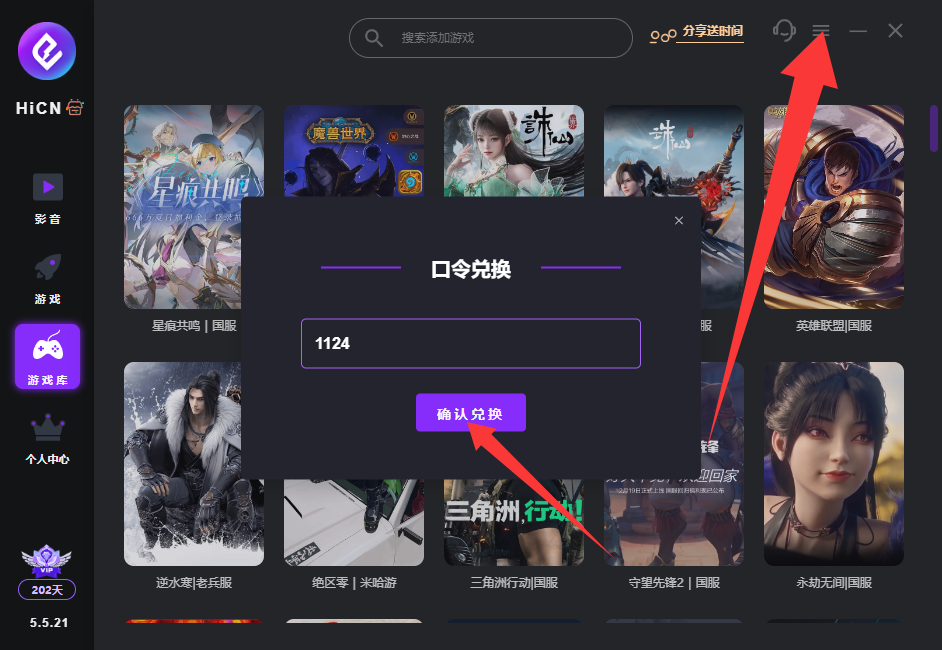
HiCN Return-to-China Accelerator Exclusive Member Redemption Code: 1124